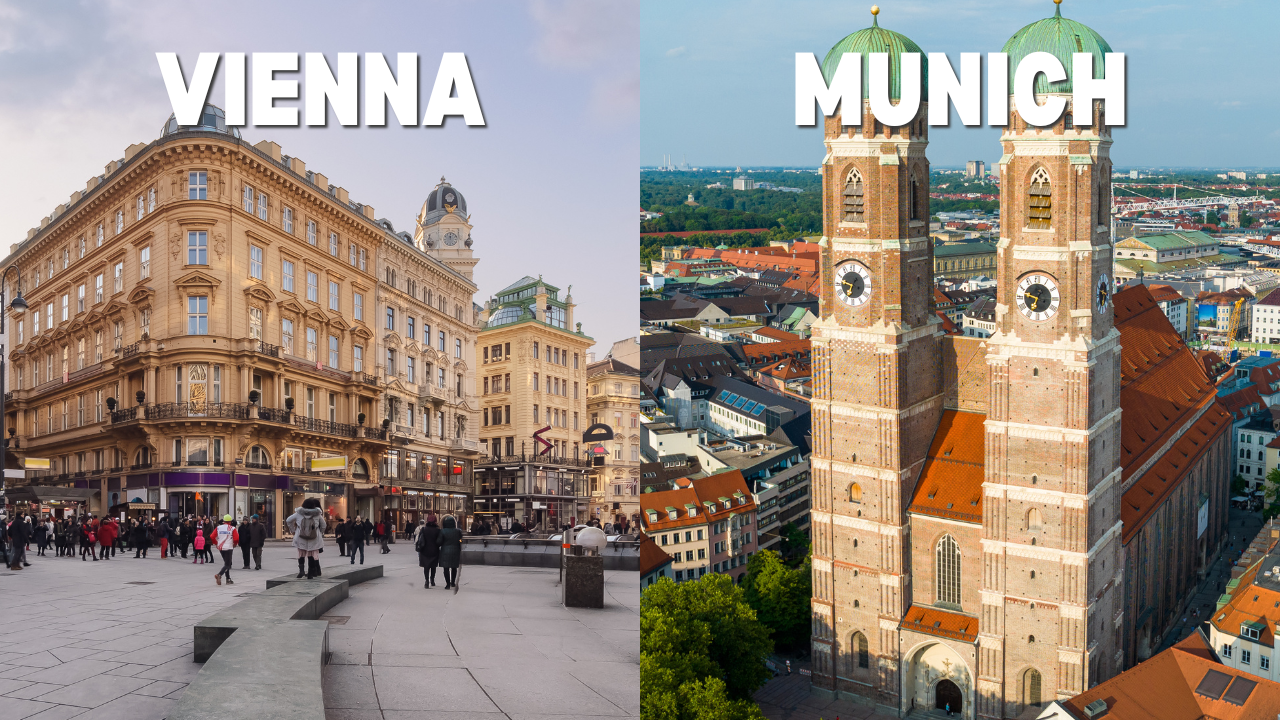
The first time I had to choose between these two, I was standing in a train station with four days and a bad map, and I picked Vienna for a reason I am still embarrassed about (the cake). Four hours on a train separates them. They both do imperial architecture, beer halls, big parks and long lunches. Travellers pit them against each other constantly, and almost nobody explains where the two cities pull apart in practice.
So here is the version our local guides in both cities would give you, with 2026 prices attached.
Quick Guide: Vienna vs Munich
- Primary recommendation: Vienna, if you want more city per day. It has deeper museums, cheaper wine, a bigger evening culture and a centre you can walk for three days without repeating yourself.
- Top choice for food: Munich, but not where you think. Head to a beer garden's self-service section, where a 1539 brewing tradition (later written into Bavarian rules) still lets you bring your own food as long as you buy the drinks there. Hirschgarten seats around 8,000 people under chestnut trees and locals turn up with tupperware.
- Top choice for culture on a budget: Vienna. Standing room at the Vienna State Opera costs €13 to €18, and since the 2025/26 season you can buy online from 10am on the day instead of queueing for three hours. Wien Museum Karlsplatz gives away its entire permanent collection for free, Klimt included.
- Value pick / atmosphere: Munich for anyone who wants the Alps within reach. Neuschwanstein, Linderhof, Herrenchiemsee and the King's House on Schachen were inscribed as a UNESCO World Heritage site on 12 July 2025, and all are day-trippable from Munich Hbf.
- The best way to see either city: Take a private, personalised walking experience with Lokafy in Vienna or Lokafy in Munich, and spend a few hours with someone who eats in these neighbourhoods every week.
- Cheat code: The Railjet links them in about four hours, roughly hourly, from around €19 booked ahead. You do not have to choose.

The short answer, by traveller type
Vienna is the bigger, denser, more theatrical city. It rewards people who like wandering with no plan, sitting in one café for two hours, and having ten museums within a tram ride. It also has a wine region inside the city limits, which is an odd thing for a European capital to have.
Munich is the more compact, more outdoorsy one. The old town is small enough to cross in twenty minutes, and the good stuff spreads outward into parks, the Isar river and the mountains beyond. If your ideal afternoon involves a bike, a river and a litre of beer, Munich wins before the conversation starts.
One clean split: Vienna is a city you look at. Munich is a city you sit in.
Getting around, and what it costs in 2026
Here is where the received wisdom has gone stale. Vienna has spent years being the cheap-transport poster child, and that changed on 1 January 2026.
Vienna (Wiener Linien): a single ticket is now €3.20. The 24-hour Vienna ticket is €10.20 and the 7-day ticket is €28.90. Importantly, the 48-hour and 72-hour passes were scrapped, so the old "get a 72-hour pass" advice you will read on half the internet no longer applies. Fines for riding without a ticket went up too. Buy in the WienMobil app and the single drops to €3.
Munich (MVV): a single ticket inside Zone M is €4.10, and the day ticket for Zone M is €9.70. A group day ticket for up to five adults is €18.70, which is the single best deal in either city if you are travelling as a pair or more. From January 2026, children aged 6 to 14 travel free on an adult single-day ticket (your own children in any number, other people's up to three).
So Munich is now marginally cheaper for a day of riding, and considerably cheaper for groups. Vienna still runs a denser network with better frequency, and Vienna's U-Bahn runs 24 hours on Friday and Saturday nights, which Munich's does not.
Both cities are flat and walkable. In Munich, Marienplatz to Glockenbachviertel is a fifteen-minute walk and Marienplatz to Schwabing is about twenty-five. In Vienna, most of what you came for sits inside or on the Ringstrasse.
Eating in Vienna: leave the first district
The single most useful piece of local advice about Vienna food is geographic. The 1st district is where the schnitzel photographs happen and where the prices climb. The good eating is in the 7th, the 16th and the 21st.
Skip the Naschmarkt for shopping. It is worth a walk-through, and then go to Brunnenmarkt in Ottakring (16th district), Vienna's longest street market, running about 170 stalls along Brunnengasse with strong Turkish and Balkan representation. It is cheaper than the Naschmarkt by a wide margin, and it is where people buy dinner rather than souvenirs. Come Saturday morning for the farmers' section at the Yppenplatz end, and turn up near closing if you like a bargain.
Do the Würstelstand properly. Viennese sausage stand culture was added to Austria's national intangible cultural heritage inventory in 2024, which is a very Viennese thing to do to a hot dog. Bitzinger behind the Albertina runs from 8am to 4am and fills up with opera-goers at midnight. Order a Käsekrainer, a cheese-stuffed sausage that will burn the roof of your mouth if you rush it.
Go north for wine, not west. Grinzing is the Heurigen village the tour buses use. Take tram 31 to Stammersdorf in the 21st district instead, where the Kellergasse is lined with tiny family cellars. A bundle of pine branches over a door means the place is open (the word is "ausg'steckt"). Bring cash. Many of these cellars still do not take cards, and the wine you want is Gemischter Satz, a field blend that is Vienna's own.
Eating in Munich: two rules that matter

Rule one: the noon rule. Weisswurst, the pale veal sausage, is a breakfast food. Tradition holds that it should never hear the midday bells, a leftover from the days before refrigeration when it was made fresh each morning. Plenty of restaurants have relaxed this and plenty have not. Locals order it before twelve, around 10am, with sweet mustard, a pretzel and a wheat beer. No knife. You suck the meat from the casing, which is called zuzeln, and nobody will look at you strangely for it.
Rule two: the beer garden loophole. In a proper Bavarian beer garden, the self-service section (Selbstbedienung, plain wooden benches, no tablecloths) lets you bring your own food. Buy your drinks there, spread out a Brotzeit of bread, cheese, radishes and cold cuts, and you have eaten in Munich for the price of a beer. Do not try this in the served section with the tablecloths. Hirschgarten is the biggest and the most local. Chinesischer Turm in the English Garden is prettier and thicker with visitors.
For markets, Viktualienmarkt is the famous one and it is fine. Elisabethmarkt in Schwabing is the better one. It reopened in September 2024 after a three-year, roughly €33 million rebuild, with 23 stalls and two public rooftop terraces, and it is small enough to feel like a neighbourhood again.
And for neighbourhoods generally: eat in Westend, Glockenbachviertel or Haidhausen. Avoid the restaurants ringing Marienplatz and the Hofbräuhaus, which price for the crowd, not the food.
Sights, palaces and what you pay
Vienna's headline act is Schönbrunn. The State Apartments ticket runs around €28, the longer Palace Ticket around €38, and entry is timed and sells out two to three weeks ahead in summer. The park itself is free and opens at 6:30am, which is the best hour of the day to be in it.
Munich's palaces are run by the Bavarian Palace Administration, and here is the detail nobody mentions: children under 18 get in free. The Nymphenburg combination ticket is about €16 (€20 in the summer season), the Residenz combination ticket is €20. If you are travelling with kids, the maths between the two cities is not close.
Vienna counters with free culture. Wien Museum Karlsplatz made its permanent exhibition free when it reopened in late 2023, the first time a permanent collection in Vienna has been free to everyone, and it is three floors of the city's history with Klimt paintings in it. Leopold Museum is free on the first Thursday evening of each month, Kunsthalle Wien on the last Sunday.
On rankings, for what they are worth: the EIU's Global Liveability Index published in July 2026 put Copenhagen first and Vienna second, with Melbourne third. Vienna had held the top spot for most of the previous decade. Liveability is not the same as visitability, but it does explain the feeling that Vienna is a city being lived in rather than performed.

Day trips: this is Munich's knockout punch
Vienna gives you the Wachau Valley, Melk Abbey and Bratislava (an hour by train). Good, but a short list.
Munich gives you Neuschwanstein, Linderhof, Herrenchiemsee, Schachen, Dachau, Salzburg, Garmisch and the Zugspitze, most of them reachable and back inside a day. The Ludwig II palaces got their UNESCO inscription in July 2025, which has done nothing to reduce the queues at Neuschwanstein, so book the timed entry before you leave home.
If you want a proper Bavarian day out with less of a crowd, Linderhof is the one locals send friends to.
When to go
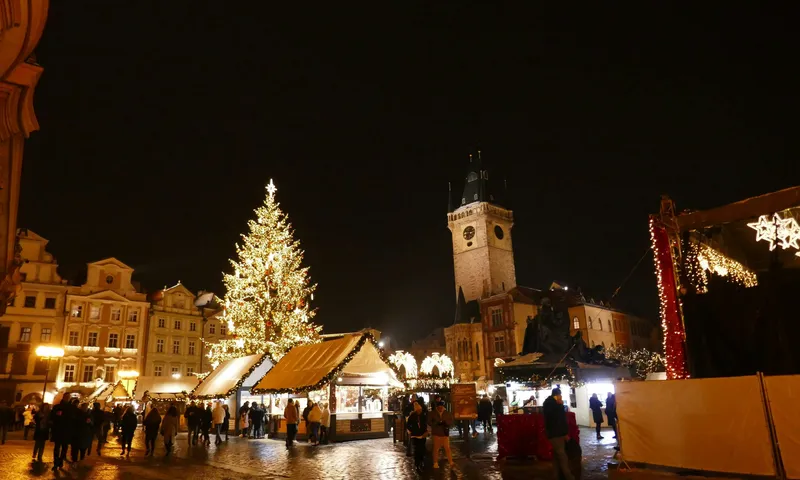
Vienna peaks in spring and autumn. September and October bring the wine harvest and Sturm, the cloudy young wine that shows up at the Heurigen for a few weeks and then vanishes. Late November through December is Christmas market season and the city is glorious and full.
Munich has one date that overrides everything: Oktoberfest 2026 runs 19 September to 4 October, the 191st edition. Entry to the grounds is free. A litre of beer costs between €14.80 and €15.90 depending on the tent (Augustiner-Festhalle is the cheapest at €14.90 and, awkwardly for everyone else, widely held to be the best beer there). If you want the version your grandmother would recognise, the Oide Wiesn is a separate fenced area with historical rides and a €4 entry fee, and it is calmer by a mile.
If you are not going to Oktoberfest, avoid Munich in those sixteen days. Hotel prices triple.
Summer in Munich is the underrated call. The Eisbach wave in the English Garden reopened for surfing on 8 May 2026 after a long closure that followed a fatal accident in April 2025 and a riverbed cleaning operation that flattened the wave entirely. It is back. Surfing is allowed between 5:30am and 10pm, a self-releasing leash is required, and watching from the bridge costs nothing at all.
Doing both Cities
The Railjet from München Hbf to Wien Hbf takes about four hours, roughly hourly, and advance fares start near €19 in second class. It runs through Salzburg and Linz, with the Alps on your right for a good stretch of it. Four nights split two and two is a very good trip, and both stations sit directly on the metro network.
If you only have three days, pick one. Splitting three days across a four-hour train is how you end up seeing two railway stations.
See either city with someone who lives there
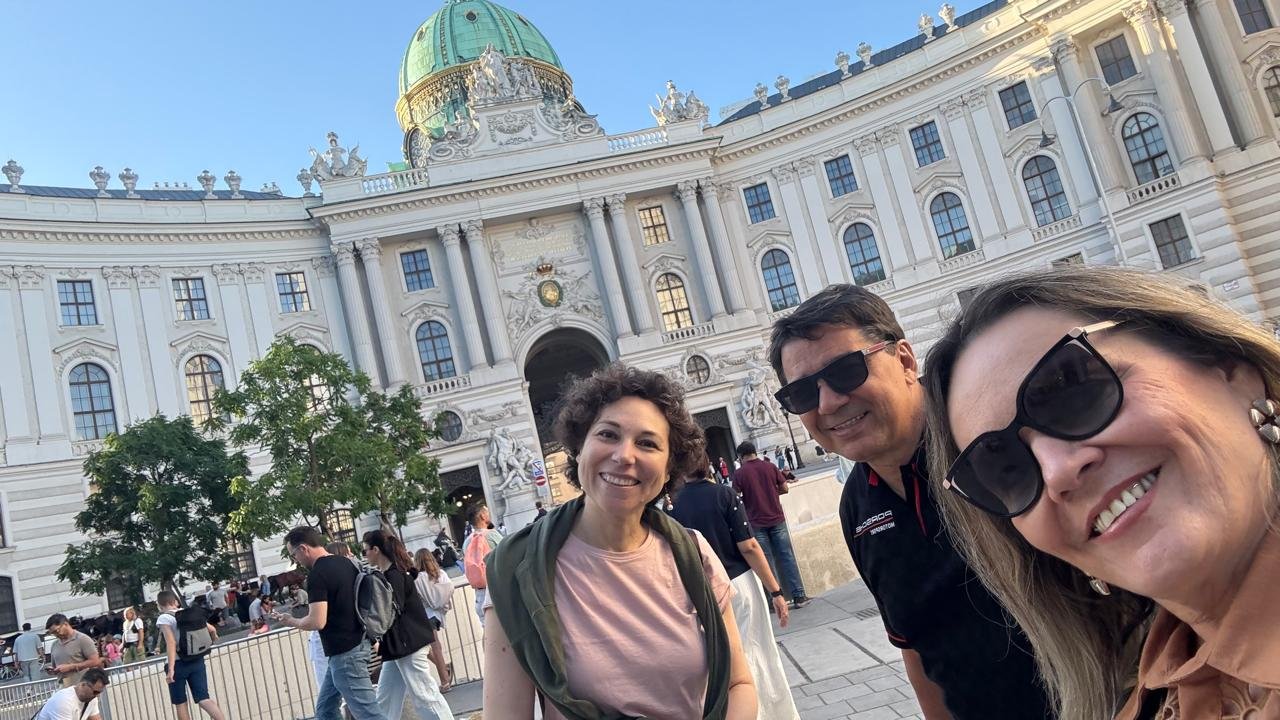
Both of these cities have a version that guidebooks describe and a version people live in, and the gap between them is wide. A Lokafyer will take you to their Heuriger, their beer garden, their market, and tell you why the place next door is a trap.
Book a personalised walking experience with a local in Vienna or Munich, and start your trip with a few hours of somebody's real neighbourhood.
Frequently Asked Questions
Is Vienna or Munich better for a first-time visitor? Vienna, for most people. It offers more to see inside the city itself, its centre is denser and more walkable, and its museums, opera and café culture give you a full itinerary without leaving town. Munich is the better pick if you want the Alps, beer gardens and river life, or if you are travelling with children, since Bavarian state palaces are free for under-18s while Vienna's Schönbrunn charges for them.
Is Vienna cheaper than Munich? Broadly yes, on food, wine and attractions, though the gap narrowed in 2026. Vienna's 24-hour transport ticket now costs €10.20 against Munich's €9.70 day ticket, and Munich's €18.70 group day ticket for up to five adults beats anything Vienna offers. Vienna wins clearly on eating and drinking: a Heuriger carafe or a Würstelstand dinner costs a fraction of a Munich beer hall meal, and Wien Museum's permanent collection is free.
How long does the train from Munich to Vienna take? About four hours on the ÖBB/DB Railjet, running roughly hourly between München Hauptbahnhof and Wien Hauptbahnhof, with advance fares starting around €19 in second class. The route passes through Salzburg and Linz. Both stations connect directly to their city's metro.
Should I visit Munich during Oktoberfest 2026? Only if Oktoberfest is the point of the trip. It runs 19 September to 4 October 2026, entry is free, and a litre of beer costs €14.80 to €15.90 depending on the tent. Hotel prices in Munich rise sharply for those sixteen days and the city centre is crowded throughout. If you want Bavaria without the crush, come in May, June or early July.
Where do locals eat in Vienna? Not the 1st district. Locals eat in the 7th (Neubau) for cafés and small restaurants, at Brunnenmarkt in the 16th for cheap, excellent Turkish and Balkan food, and at Würstelstände all over the city. For wine, they take tram 31 to Stammersdorf rather than the bus to Grinzing, and they bring cash because many cellars still do not take cards.
Can you really bring your own food to a Munich beer garden? Yes, in the self-service section of a traditional beer garden, which is the area with plain wooden benches and no tablecloths. You must buy your drinks on site. It is a tradition rooted in the 1539 Bavarian brewing ordinance and later protected in the beer garden regulations, and locals use it constantly. Hirschgarten, which seats around 8,000, is the classic spot. Do not carry outside food into the served section.
Is two days enough for Vienna or Munich? Two days works for Munich: the old town is compact, and you can fit Marienplatz, the English Garden, a beer garden and one palace comfortably. Vienna needs three at minimum. Schönbrunn alone eats half a day, the museum quarter another, and the wine villages on the city's edge deserve an evening of their own.
Which city is better for museums, Vienna or Munich? Vienna, comfortably. The Kunsthistorisches, the Belvedere, the Leopold and the Albertina sit within a short walk of each other, and Wien Museum Karlsplatz is free. Munich's Pinakotheken and Deutsches Museum are strong, but the concentration and the depth are not on Vienna's level.
Enjoyed this article?